| Photos taken by Mary Wolfinger. The chipmunk's name is "Chippy" |
A unique look at the wildlife in the direct vicinity of North Coventry Pennsylvania. We encourage you to notify us of unique wildlife in our surrounding area. You may contact us at lauriek908@gmail.com
Saturday, June 29, 2013
Chipmunk sightings.
Chipmunks have been reported frequently in the last few weeks. One picture was sent in to us. Chipmunks are part of the squirrel family. There are 25 species of chipmunk, 24 of which live in North America. The only chipmunk that doesn't live in North America is the Asiatic chipmunk, which can be found in northern Asia and parts of Eastern Europe. Chipmunks create dens to live in that will contain two different rooms in them. One room is a sleeping chamber while the other is a place to store food.
Monday, May 27, 2013
Black Necked Garter Snake Spotted!
A black garter snake was spotted recently in our area and photographed. The garter snake is commonly mis-pronounced as garden snake. Easily identified by the two large blotches of black on the neck. These snakes are not native to Pennsylvania. They are original found in the Utah, Texas and Colorado. These snakes are active during the day. The picture here shows them basking due to their ectothermic nature. It east frogs, toads and tadpoles when near water.
| Photograph Taken by Mary Wolfinger |
Wednesday, April 17, 2013
Tiny Turtle Found
Today a tiny turtle was found at Coventry Lake. It was spotted trying to cross the pathway in the open space. It was a far distance from a water source so he was picked up and moved to a nearby water source. The tiny turtle appears to be a common box turtle. You can see it in the hand of a toddler. Box turtles are a numerous turtle in Pennsylvania. However, they are not the most common turtle. The red eared slider is the most common turtle in PA and the most commonly sold turtle in the pet store.
| Tiny Box Turtle From Coventry Lake |
Tuesday, February 12, 2013
Gorilla Encounter
This video link was sent to us by a fan. It is truly amazing. It is a man who gets an up close an personal encounter with a silverback gorilla and his family. I would be very afraid if I were in this man's shoes. Apparently he was scared to due to the fact that he wets himself during the encounter.
Simply click here to launch the video:
Gorilla's are close to humans in the evolutionary scale. Here is a diagram I have used in presentations on the lineage of Gorilla's before.

Simply click here to launch the video:
Gorilla's are close to humans in the evolutionary scale. Here is a diagram I have used in presentations on the lineage of Gorilla's before.
Taxonomy of genus Gorilla | Phylogeny of superfamily Hominoidea | |||||||||||||||||||||||||
|---|---|---|---|---|---|---|---|---|---|---|---|---|---|---|---|---|---|---|---|---|---|---|---|---|---|---|
|
|
Wednesday, January 23, 2013
Osprey filmed catching fish!
The Osprey is a familiar bird of prey to most. If you don't know it by name you will recognize it once you see it in this awesome film a follower sent to us. Osprey description according to the National Geographic field guide to birds: Dark brown above, white below, white head dark eye stripe. Females usually have darker neck streaks. Wings appear to be bent back in flight. Scientific Name: Pandion haliaetus. Usually found near an aquatic habitat. Here is video a follower sent to us.
This is truly incredible video. I can't believe this Osprey got 5-6 fish at a time, then got a flounder under 3' of water, and then made off with what looks to be a 5+ lb. Steelhead. I've never seen a bird shake water off like a dog does
There are 3 sequences in this one video:
1st sequence he catches half a dozen fish in one strike.
2nd sequence he plunges talons into deep water right to the bottom to grab his prey.
3rd sequence he captures a big old fat fish that looks as if it weighs more than he does!
This is incredible to watch... Enjoy
1st sequence he catches half a dozen fish in one strike.
2nd sequence he plunges talons into deep water right to the bottom to grab his prey.
3rd sequence he captures a big old fat fish that looks as if it weighs more than he does!
This is incredible to watch... Enjoy
Tuesday, January 8, 2013
Deer running out of room?
| Photos courtesy of Mary Wolfinger |
Friday, December 14, 2012
Rocky the squirrel
Rocky the squirrel is a wild pet of one of our fans. He often visits the home and is not afraid of humans. He will often let the homeowners get very close to him before he flees into the woods. Did you know squirrels are the most active in late winter, when the mating season begins. The males will chase a females, as well as, chase off other suitors. This ritual of chasing, occurs through the trees at top speed. Squirrels are usually born in the early spring. The average litter consists of four. This varies with climate and location. A second litter can occur in mid summer, if there is an adequate food supply.
| Photos courtesy of Mary Wolfinger |
Tuesday, December 4, 2012
Winter Birds
The winter weather isn't so harsh so far in North Coventry. One or two weeks of a brisk cold front and now right back to 60 degree days. This is good for local wildlife. There have been many birds spotted around our area. Here are some viewer photographs of some local birds. The bird with a red stripe on its head is called a Flicker. It is commonly known as a wood pecker.
![]() |
| Baby bird sleeping! |
Tuesday, March 20, 2012
Black Deer Spotted and Picture Taken
A black deer was spotted and a picture was taken and sent to Coventry Wildlife. A black fawn is more rare than Albino deer and is a biological rarity. It is possible but very unlikely. Pictures were taken by Richard Buquoi near Austin, Texas. Thank you fans for the original source for the photos.
Sunday, February 26, 2012
Spring Surrounds us in North Coventry
The thought of spring time is one that is loved by many. Gardens are being planned, mulch is being ordered and the snow is a distant memory. Well that would be nice but it actually snowed here on Saturday pretty hard for about an hour. Spring time is almost here and it can be seen with the amount of wildlife showing up. On Saturday over 120 robins were seen in Coventry Lake Estates. Along with the robins many people have been reporting different types of birds such as crows and chickadees. No pictures were taken but we will continue to try. Many of the bird species in our state are here year round. It is just easier to see them during early spring because you are outside more often.
Thursday, February 2, 2012
Coventry Wildlife is back!!!!
After a major computer issue, that is we didn't have one, Coventry Wildlife is back! And what better day to come back than ground hog day. Punxsutawney Phil was out and about today and that rodent saw his shadow, again! The prognosticator of prognosticators says there will be 6 more weeks of winter. Well Phil, it was almost 60 degrees today so we will see about that. Most people know groundhog day started here in PA but it is rather strange. The first official Groundhog Day celebration took place on February 2, 1887, in Punxsutawney, Pennsylvania. It was the brainchild of local newspaper editor Clymer Freas, who sold a group of businessmen and groundhog hunters—known collectively as the Punxsutawney Groundhog Club—on the idea. The men trekked to a site called Gobbler’s Knob, where the inaugural groundhog became the bearer of bad news when he saw his shadow. Did you know there are other prognosticating ground hogs? They are Staten Island Chuck and Wiarton Willie.

Phil is above, looking good.
![]() |
| Staten Island Chuck with Mayor Bloomberg in NY. |
![]() |
| Wiarton Willie |
Friday, August 26, 2011
Snakes in North Coventry
Two snakes have been reported to Coventry Wildlife. One was seen while a resident of coventry lake was mowing their yard. This was a garter snake. The other snake was reported with a different story. A large black snake was reported when a local coon hound dog had it attached to its ear and the body of the snake was wrapped around the dog's neck! Picture that. Both snakes are non venomous. The black snake was about 4 feet long.
Thursday, August 18, 2011
Spiders abound!
Many spiders have been reported to Coventry wildlife the past week. Spiders love moist areas. Many times you will find them in your basement due to the increased moisture found there. You can often see many spiders and their eggs in the mulch around your house because mulch retains moisture. The most common type of spider in our area is called a wolf spider and they can be big.
Tuesday, August 2, 2011
Field mice in an umbrella!
A field mouse was seen in an umbrella at Coventry Lake this week. The mouse was under the umbrella at the top in the little pocket that allows the umbrella to open. In North America, breathing dust that has come in contact with mouse excrement has been linked to hantavirus which may lead to Hantavirus Pulmonary Syndrome (HPS). Mice are primarily nocturnal animals that rely on other senses outside of eyesight. Vision is not one of their best senses. The picture below is from google images as the mouse scared the homeowner.
Friday, July 29, 2011
Butterflies seen at Coventry Lake
Two different types of butterflies have been dominant this summer at Coventry Lake. The yellow swallow tail butterfly and the monarch butterfly have both been seen in great numbers. The swallow tail gets its name by the two small swallows on the rear of the wings. The monarch butterfly migrates a tremendous distance. They are the only butterfly that migrates north and south. Around the first week in August the butterfly will start to migrate south toward Mexico and make its way back here in the spring. The photos are courtesy of google images.
![]() |
| Monarch Butterfly |
![]() |
| Swallowtail butterfly |
Saturday, July 16, 2011
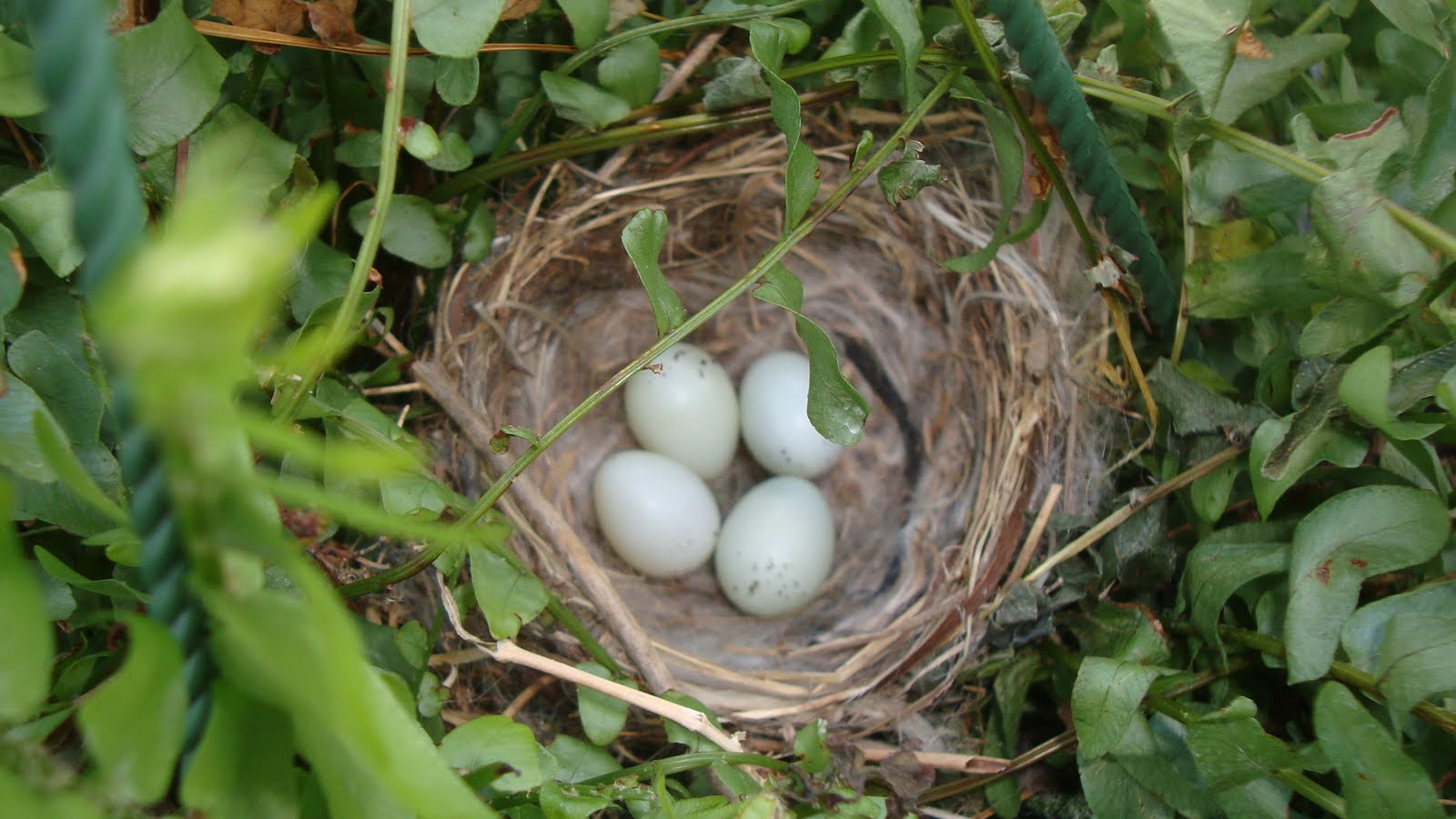
Got Eggs?
House finch eggs were seen in a patio fern this week. The eggs are much smaller than Robin eggs and are white in color. There are four potential house finches in this nest. The house finch is one of the most common birds to visit a back yard. The Male's forehead, bib and rump are red in color as the females are a dusky brown on their entire body. The house finch has been found in the most densely populated areas in the world including large cities such as Philadelphia and New York.
| Photo take by Rich Kolka |
Tuesday, July 12, 2011
Rabid Animals Seen During Summer Time
There have been reports of a few rabid animals during this summer. One was a raccoon seen at Marsh Creek State Park and the other was a rabid cat seen at Coventry Lake. How can you tell if an animal has Rabies? First if any animal is overly friendly or does not scatter when you approach it, that could be a sign. The most obvious sign is if an animal such as a raccoon who is nocturnal is seen during the day light hours. This would most certainly mean a rabid animal. The picture below is courtesy of google images.
Friday, July 1, 2011
Tree frogs seen at Coventry Lake
A gray tree frog was seen at Coventry Lake this week. The frog was stuck to a sliding glass door and when the door was opened the frog jumped directly onto the person leaving the door! It was awesome! The frog stood still long enough to have its picture taken. The gray tree frog's scientific name is Hyla chrysoscelis. It has a cream colored ventral or belly surface and its back or dorsal surface can range from gray to light green. They are abundant in PA.
| Photo taken by Rich Kolka |
Monday, June 27, 2011
Mink spotted along 724!
Numerous Minks have been spotted and reported by wildlife expert and avid hunter Barry Dawson. Along route 724 heading toward reading is where the Mink was spotted. The mink spends a lot of time in the water hunting for food. It is a mammal that has waterproofing oil glands that will cover its fur. The mink can dive up to 16 feet to capture its food which consists of snakes, birds, muskrats, rabbits, mice and chipmunks. Although they may look cute, stay back! They have an awful smell similar to a skunk but unlike the skunk, they cannot aim their spray. The picture below is courtesy of google images.
Monday, June 20, 2011
Spring Mating Season for Toads
Springtime is mating time for many different species of animals. On Father's day this past Sunday a number of tiny toads and frogs were seen at Coventry Lake. The toad in this picture was taken by Laurie Kolka in the hands of Rich Kolka. The toad instantaneously urinated as that is one of its defense mechanisms. Toads differ from frogs by being able to live further from water and they have drier skin.
Subscribe to:
Posts (Atom)